
Read More
2026-08-02 5 mins read
1PL, 2PL, 3PL, 4PL, 5PL: The Logistics Tiers Explained and Where the Importer of Record Fits
Read More

Trade Compliance
If you’ve ever stood on a warehouse floor with pallets of untagged returns, you already know this: without a structured RMA process, returns become operational noise.
The Return Merchandise Authorization process is not just a customer service step — it is the control system that protects inventory accuracy, warranty cost, and compliance. In B2B sectors like IT, telecom, and medical devices, a disciplined RMA framework separates controlled operations from margin leakage.
At its core, the RMA steps follow a predictable structure. What matters is how tightly they are controlled.
Customer submits request via portal, form, or support channel with order number, serial, and failure reason.
Operational reality: If serial capture is weak here, everything downstream becomes manual.
Support validates warranty status and policy rules. Low-risk cases may be auto-approved.
Control point: This is where cross-border movement should be flagged.
Customer receives an RMA number, return address, packaging rules, and documentation instructions. Understanding what an RMA number is and how it functions.
Why it matters: The RMA number is the routing key inside the warehouse system.
Customer ships product with RMA clearly labeled and required accessories included.
Risk factor: For international returns, the declared value and invoice language must be correct.
Warehouse logs the serial number, inspects the condition, and assigns a disposition code (repair, scrap, or replace).
Data point: Inspection findings should feed back into quality and warranty analytics.
Refund, credit, repair, or replacement is processed. ERP/WMS is updated, and the customer is notified.
Financial impact: Refund cycle time directly affects customer trust and revenue reporting.
This is where most organizations underestimate risk.
Common failure points:
Serial numbers not matching export documentation
Incorrect declared value leading to unexpected duties
No defined Exporter of Record (EOR)
Regulated technology shipped without an export control review
Replacement units sent without proper customs classification
One of the most frequent questions is: how long is rma process end-to-end?
Approval: Hours to 2 business days
Transit + Check-in: Carrier SLA + 1 day
Inspection & Resolution: 2–10 business days
Export declaration review
Customs processing time
Documentation validation
Possible regulatory screening
In practice, most international RMA delays stem from paperwork inconsistencies, not warehouse backlog
In practice, improving the RMA process requires tightening two layers: operational speed and compliance control. Most organizations optimize one and ignore the other — which creates friction later. Increasingly, companies are turning to AI in reverse logistics and RMA to automate both layers simultaneously — reducing approval cycle times while flagging compliance gaps before they become shipment delays.
Below is a structured improvement framework used in enterprise after-sales environments.
Focus Area | Action | Why It Matters | Impact |
|---|---|---|---|
In international environments, I’ve seen organizations cut domestic turnaround by 20% through automation — but still suffer 2–3 week delays on cross-border RMAs because export documentation was treated as an afterthought.
The real improvement happens when operational approval and compliance validation occur at the same stage — not sequentially.
Regulated industries amplify cross-border RMA complexity - for context on how the same regulatory frameworks operate on inbound shipments, see our case study on expediting medical tech approvals in APAC
Cross-border RMA adds another layer of complexity. When goods move internationally for repair or replacement, you must manage customs documentation, declared value basis, serial capture, and potential duty relief.
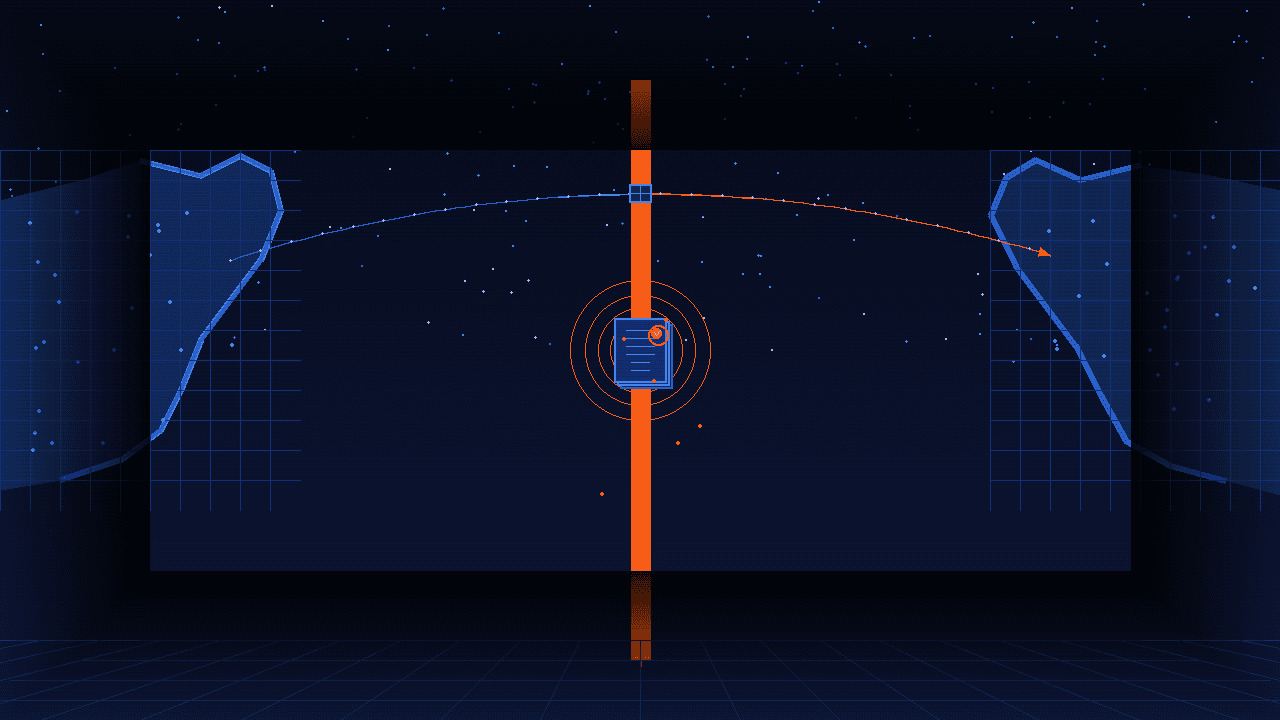
If you do not have a local entity, you may require an Importer or Exporter of Record for international returns to legally manage the transaction.
Key controls include:
Proper “Return for Repair” invoice language
Correct HS classification + serial documentation
If returned goods cross borders and you do not have a legal entity in the exporting country, you may require an Exporter of Record to:
File export declarations
Ensure export control compliance
Manage temporary export or duty relief programs
Coordinate replacement shipments legally
Without a defined EOR responsibility, shipments can be stopped, duties applied incorrectly, or compliance exposure created.
If your RMA flow involves multiple jurisdictions, talk to IOR EOR about cross-border RMA compliance support
The RMA process in B2B sectors (IT, telecom, medical devices) is a structured authorization and tracking workflow that governs product returns, repairs, or replacements. It controls warranty validation, serial traceability, warehouse inspection, financial resolution, and — in cross-border cases — export and customs compliance.
If returned goods cross borders and your company does not have a legal exporting entity in that country, an Exporter of Record is typically required. The EOR files export declarations, ensure regulatory compliance, and assume legal responsibility for the shipment.
International RMA shipments typically require:
Commercial invoice with “Return for Repair” language
Serial number documentation
Correct HS classification
Declared value aligned with customs rules
Regulatory approvals if dealing with controlled or medical equipment
Focus on early-stage controls: rule-based approvals, serial capture at the request stage, defined valuation policies, and automated notifications. Integrating compliance validation during approval — rather than after shipment — significantly reduces rework and cross-border delays.
Yes. The RMA number links the return to the original order, warranty terms, and warehouse disposition. Without it, returns slow down, inspection errors increase, and financial reconciliation becomes manual.


Operational
Self-service portal with rule-based auto-approvals |
Reduces manual review time and support tickets |
Faster approvals (hours vs. days) |
Operational | Standardized packaging & RMA labeling requirements | Prevents warehouse misroutes and unidentified returns | Lower rework & dock delays |
Operational | Structured reason codes + photo evidence | Reduces “No Fault Found” (NFF) returns | Lower inspection workload |
Operational | Automated customer notifications (approval, receipt, resolution) | Aligns expectations and reduces follow-up tickets | Higher CSAT, fewer escalations |
Operational | KPI dashboard (turnaround time, % auto-approved, refund speed) | Enables continuous improvement | Margin protection |
Compliance | Serial + HS code captured at the request stage | Prevents customs mismatch and export screening gaps | Fewer cross-border delays |
Compliance | Defined declared value policy (repair vs. replacement value) | Controls unexpected duty exposure | Financial predictability |
Compliance | Clear IOR/EOR assignment for cross-border returns | Ensures legal export/import responsibility | Prevents shipment holds |
Compliance | Track customs-related delay metrics | Identifies compliance bottlenecks early | Shorter international RMA cycle |
Compliance | Standard “Return for Repair” invoice template | Supports duty relief and correct customs valuation | Avoids double duty payments |
Regulatory approvals for IT, telecom, or medical devices
Duty drawback or temporary import programs, where applicable
Structured EOR Singapore RMA support for cross-border returns routing through Southeast Asia — where Singapore's TradeNet system and Strategic Goods Control requirements add a compliance layer that most reverse logistics teams are not equipped to handle independently.