Read More
2026-08-02 5 mins read
1PL, 2PL, 3PL, 4PL, 5PL: The Logistics Tiers Explained and Where the Importer of Record Fits
Read More

Importer of Record
In global trade, pricing is negotiated, freight is scheduled, and delivery timelines are planned, but customs makes its decision based on origin. Before duties are applied or Free Trade Agreement benefits are granted, authorities look for one document that substantiates where the product was legally manufactured: the Certificate of Origin.
For technology, telecom, and medical shipments moving through regulated markets, this document is more than a trade form. It determines tariff treatment, validates preferential claims, and protects against trade-remedy exposure. When origin is unclear or unsupported, the impact is immediate — from clearance holds to unexpected duty reassessments.
Understanding how the Certificate of Origin works is therefore not procedural knowledge; it is operational risk management — and it sits at the core of trade compliance documentation that every cross-border shipper must have in order before goods reach the border.
A Certificate of Origin is an official document certifying the country in which goods were manufactured or substantially transformed. Customs authorities use it to apply duties, confirm FTA eligibility, and enforce trade measures.
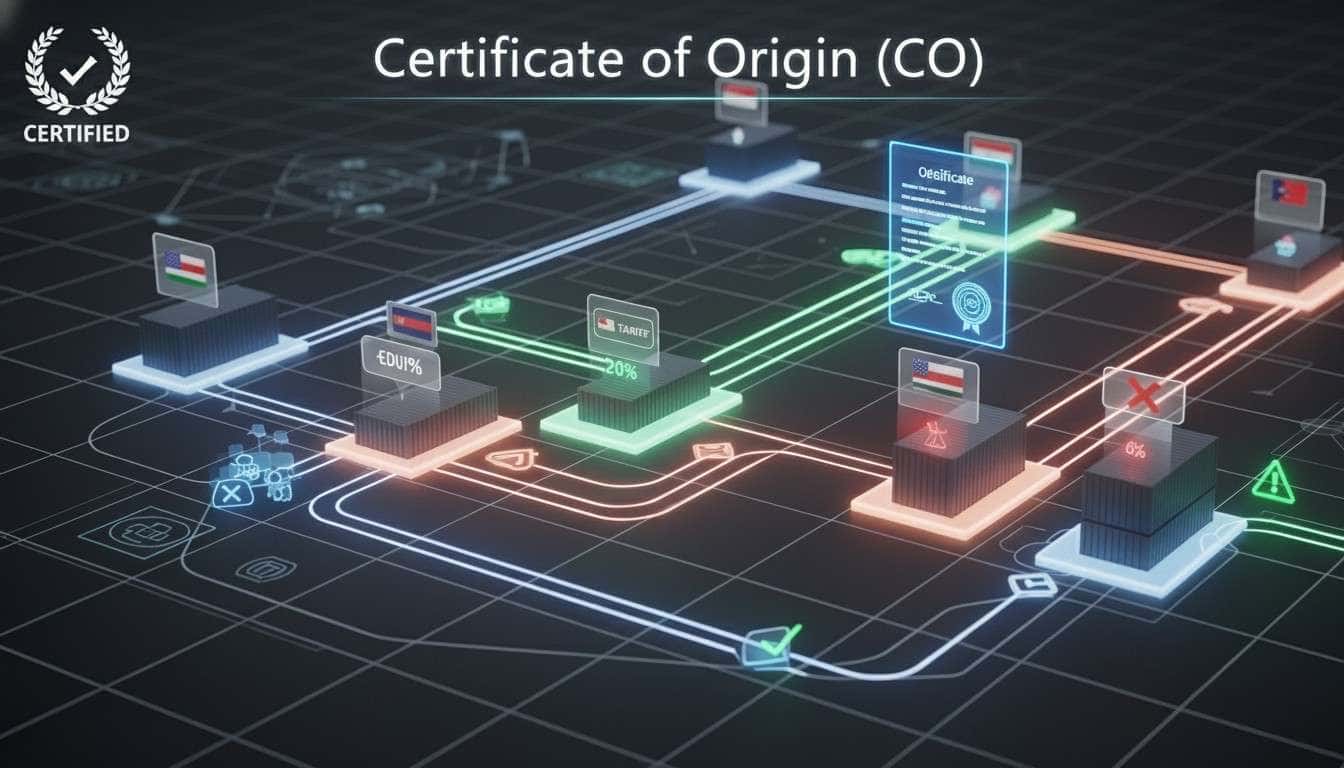
A CO:
Verifies the country of origin of the goods
Supports claims for preferential tariffs under FTAs
Helps enforce trade controls, quotas, and anti-dumping measures
Preferential CO
Used when goods qualify for reduced or zero tariffs under an FTA (e.g., USMCA, GSP, regional trade agreements).
Confirms compliance with specific FTA rules of origin.
Incorrect use can trigger retroactive duties and penalties.
Non-Preferential CO
Used when no FTA preference applies.
Confirms origin for standard tariff application or trade-remedy checks.
Still required in many jurisdictions for customs clearance and import licensing.
Certificates of Origin are typically issued or certified by accredited chambers of commerce or authorized trade bodies. Many jurisdictions now accept electronic Certificates of Origin (e-COs) with QR-based verification.
Typical process:
Register with an accredited chamber of commerce
Submit shipment details (invoice, packing list, HS codes classification, manufacturing data)
Provide origin evidence for verification
Receive the issued certificate (often electronically)
In documentary credit transactions, buyers may require a CO as part of the Letter of Credit (LoC) terms. Always review LoC language carefully to avoid discrepancies.
Customs authorities determine origin based on defined rules of origin. Two common principles apply:
Wholly obtained: Goods entirely produced in one country (e.g., mined or grown).
Last substantial transformation: The country where the product underwent its final economically justified manufacturing process.
Key considerations:
- Multi-country supply chains require careful origin analysis.
- Transshipment does not change the origin.
- The transformation point must be documented clearly (Bill of Materials, manufacturing process records, cost breakdowns, and bill of lading requirements that confirm the shipment routing and declared origin are fully consistent across all commercial documents).
The CO directly influences:

Applied tariff rate, which varies significantly depending on duty rates by country and whether a preferential FTA claim can be substantiated
FTA eligibility
Exposure to trade remedies or sanctions
An incorrect or missing CO can result in shipment holds, full-duty charges, retroactive reassessment, or penalties. In some sectors, authorities actively monitor for “origin washing,” where origin is misdeclared to avoid duties.
Enter your email to receive the PDF download link.
HS code aligns with the declared product and origin claim
Shipper and consignee details are consistent across documents
Invoice and packing list data match the CO
FTA form requirements are fully completed
Authorized signatory and accredited issuer are confirmed
Using the wrong FTA certificate format
Inconsistent values, weights, or product descriptions
Issuance by a non-accredited chamber
Claiming preferential treatment without documented origin proof
Assuming transshipment changes origin
Fix:
Validate CO requirements against the importer’s country regulations and confirm issuer accreditation. When supply chains are complex, compliance review or Importer of Record (IOR) support can prevent costly corrections.
Experience in Practice
In one recent tech deployment, a misclassified origin triggered exposure to anti-dumping duties. A pre-clearance CO correction—supported by documented transformation evidence—prevented reassessment and avoided significant cost escalation.
Origin validation is not administrative. It is strategic.

IOR EOR prepares and certifies Certificates of Origin, aligns FTA documentation with substantiated rules-of-origin evidence, and supports regulated market entry to avoid clearance holds and unnecessary duties.
Not always. Requirements depend on the destination country, product category, and trade agreement status. However, many jurisdictions require one for customs clearance.
In many countries, exporters can prepare the certificate, but it must be certified or validated by an accredited chamber or authorized body.
Increasingly yes. Many customs authorities accept e-COs with digital verification systems.
No. Origin is determined by manufacturing or substantial transformation—not routing.