
Read More
2026-08-02 5 mins read
1PL, 2PL, 3PL, 4PL, 5PL: The Logistics Tiers Explained and Where the Importer of Record Fits
Read More

Trade Compliance
Forward supply chains get all the attention: production, distribution, fulfillment, and last-mile delivery. But anyone who has operated inside tech hardware, telecom infrastructure, or enterprise IT knows the real complexity begins when products start coming back.
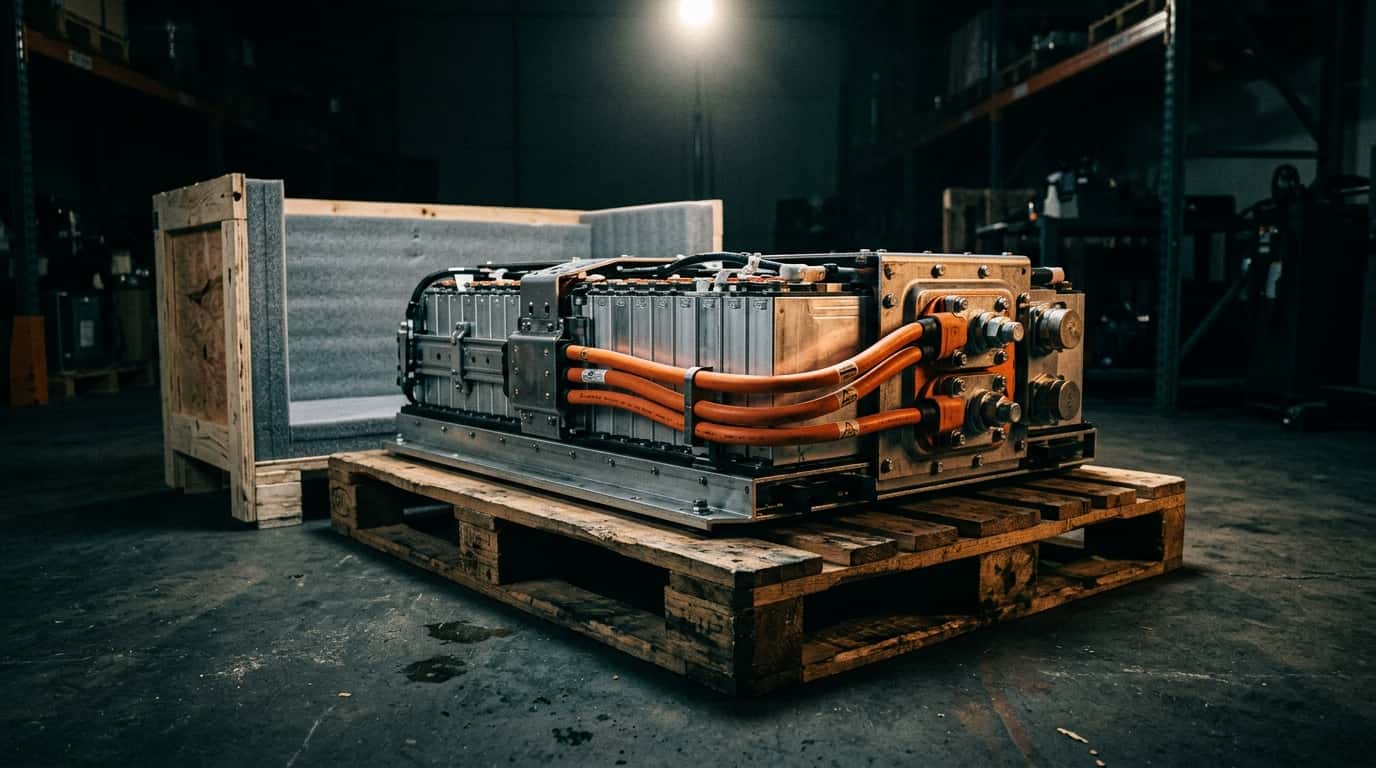
In high-value industries like servers, networking equipment, telecom gear, data-center hardware, and electronics, returns are not just customer service events; they are operational, financial, and compliance events.
A failed router in a regional data center.
A defective server blade shipped back across borders.
An RMA batch of telecom modules needs inspection and reclassification — for a full breakdown of how this process works, see RMA explained.
Without a structured reverse supply chain, value leaks at every stage
A reverse supply chain is the structured process that manages the movement of goods from the customer back to the seller, manufacturer, or recovery facility for value recovery, repair, resale, recycling, or compliant disposal.
Unlike forward logistics (Manufacturer → Distributor → Customer), reverse supply chains manage:
Return pickups
RMA processing
Inspection and diagnostics
Sorting and grading
Repair and refurbishment
Recycling or certified disposal
Inventory reintegration
From an operational standpoint:
Reverse logistics
focuses on the transportation and physical movement of returned goods.
The reverse supply chain
includes the entire ecosystem, policy, compliance, asset recovery, diagnostics, resale channels, and sustainability integration.
In electronics and IT hardware, this distinction matters. A returned server is not “just a shipment.” It’s an asset with residual value, data security risks, customs implications, and lifecycle potential.
Companies that consistently mark every return with the RMA identifier on packages cut their average return processing time by 30–40% — the operational gain comes from instant routing, not faster physical handling.
In practice, companies that treat reverse flows strategically outperform those that treat returns as operational waste. When refresh cycles are treated as strategic reverse flows rather than logistics overhead, recovered value and faster deployment compound - see our strategic IT refresh case study where this approach cut total EMEA refresh time by 25%
When structured correctly, reverse supply chains reduce leakage.
According to research discussed in Harvard Business Review, companies that optimize reverse flows often recover significant asset value otherwise lost in unmanaged returns.
Returns are customer experience moments.
Transparent RMA processes build trust
Faster replacements improve uptime
Clear status updates reduce support friction
Structured return policies increase loyalty
In enterprise IT environments, the speed of replacement directly affects uptime and SLA performance.
Reverse supply chains directly support circular models.
Reduced waste through reuse
Material recovery from components
Lower environmental footprint
Alignment with circular economy principles
Returned goods contain data.
Repaired components re-enter inventory
Refurbished units create secondary revenue streams
Failure analysis informs product design improvements
Spare pools reduce unnecessary overproduction
Organizations that master reverse supply chains gain:
Faster resolution cycles
More flexible service models
Stronger after-sales positioning
Enhanced compliance control
Reverse supply chains vary by industry and product type.
Common models include:
Repair & Refurbish: Restore assets for resale or redeployment
Recycle / Material Recovery: Extract reusable materials
Return-to-Vendor (RTV): Transfer unsold inventory upstream
A typical reverse supply chain follows these stages:
Return Request / RMA Initiation
Customer submits a return through the structured workflow.
Pickup or Drop-Off Logistics
Coordinated transport to the returns center.
Reverse flows are operationally heavier than forward flows. Every returned unit requires a decision, and every decision has cost, compliance, and lifecycle implications.
Here’s how the main challenges break down in practice:
Operational Challenge | What Happens in Reality | Operational Risk | How to Avoid It |
|---|---|---|---|
High Manual Processing Costs | Each return is handled individually, with paper-based RMA approvals and inconsistent diagnostics |
In international reverse flows, documentation determines movement. When returned goods cross borders, they are not automatically recognized as “returns.” Customs authorities evaluate what is declared, not what is intended — which is precisely why EOR for reverse logistics is essential: the legal export entity ensures every outbound return is filed correctly before the shipment ever leaves.
This is where structured IOR/EOR frameworks become critical.
Align Documentation Before Shipment Moves
Ensure the return references the original export documents, serial numbers, and commercial invoice data. Misalignment here is one of the most common causes of customs holds.
Manage Proper Re-Import Classification
Returned goods must be declared under the correct procedure (e.g., repair return, warranty replacement, temporary export return). Without correct classification, customs may treat the item as a new import.
Reverse flows reduce landfill pressure and increase material recovery.
Secondary materials enter new production cycles
Energy savings achieved through refurbishment vs new manufacturing
ESG reporting strengthened through lifecycle tracking
The U.S. EPA emphasizes material reuse and recycling as core elements of sustainable resource management. Structured reverse supply chains operationalize these principles.
A mid-sized enterprise hardware provider implemented structured reverse operations:
Centralized RMA approval system
Regional diagnostic hubs
Refurbishment grading protocol
Reintegration into secondary sales channels
Data collection on component failure
Result:
Improved hardware reuse rates
Faster RMA cycle time
Stronger aftermarket revenue
Enhanced sustainability reporting
When evaluating providers, focus on:
Proven experience in electronics & IT hardware
Structured RMA workflow management
Refurbishment and diagnostics capability
Multi-region operational coverage
Cross-border compliance expertise
Reverse supply chains are no longer optional — they are essential systems for protecting value, ensuring compliance, and extending product lifecycles.
Companies that structure their reverse flows properly reduce costs, improve sustainability performance, and strengthen after-sales operations.
If your returns involve high-value or cross-border equipment, a compliance-focused review of your reverse workflow is no longer a luxury — it’s a necessity.
Consolidated pickups reduce transport duplication
Centralized returns centers lower handling inefficiencies
Refurbishment recovers product value instead of writing off assets — a principle at the core of the reverse logistics backbone that turns returns from cost events into measurable value recovery opportunities.
Reduced landfill or disposal costs
Green Reverse Supply Chain: Sustainability-focused design
Resell (Refurbished/Open Box Markets): Monetize recovered inventory
Cross-Border RMA: Manage international returns with compliance oversight
Inspection & Sorting
Condition assessment, diagnostics, and grading.
Decision Path
Resell • Repair • Refurbish • Recycle • Dispose.
Inventory Reintegration
Recovered products re-enter stock or secondary markets.
Compliance & Cross-Border Controls
Documentation, valuation, and environmental regulations were addressed where required, managed across markets through the IOR EOR global network that provides local compliance presence in every destination country.
Rising labor costs, slow cycle time, and margin erosion |
Standardized RMA workflows, automated intake systems, centralized return hubs — increasingly powered by AI-powered returns management tools that reduce manual processing costs while improving inspection accuracy and cycle time. |
Multi-Channel Return Fragmentation | Returns coming from distributors, resellers, enterprise clients, and end-users, with no unified process | Inventory confusion, lost assets, duplicated replacements | Unified reverse policy across all sales channels |
Poor Visibility Across RMA Status | No centralized dashboard for tracking inspection, repair, or reintegration | Delays, customer dissatisfaction, SLA breaches | Integrated tracking systems with status transparency |
Cross-Border Documentation Mismatches | Returned goods declared as “new imports” instead of “re-import under RMA.” | Customs holds, reclassification penalties, and unexpected duties | Early compliance review before shipment initiation |
Improper RMA Tracking | Serial numbers not logged correctly, repair history not documented | Warranty disputes, asset loss, compliance exposure | Serialized tracking tied to ERP and warehouse systems |
Prevent Double Duties and Tax Exposure
Improper re-entry declarations can trigger full duty and VAT charges again. Structured IOR import compliance ensures applicable duty relief mechanisms are correctly applied at the destination, preventing unnecessary financial exposure on re-imported goods.
Control HS Code and Valuation Risks
Returned telecom or IT hardware is often misclassified due to condition changes (used vs. new). Proper classification prevents penalties or revaluation assessments.
Reduce Shipment Seizure Risk
High-value electronics and telecom modules are commonly flagged during re-import. A compliant IOR/EOR framework ensures documentation supports lawful entry.
Support Regulatory-Sensitive Equipment
Servers, encryption-capable hardware, networking devices, and telecom boards may require specific regulatory declarations. IOR oversight ensures compliance continuity during reverse movement.
Ensure Clear Chain of Custody
In enterprise environments, tracking serial numbers and repair history protects against warranty disputes and asset loss.
Stabilize Global RMA Programs
For multinational IT and telecom companies, centralized IOR/EOR governance creates consistency across regions and prevents fragmented return practices.
Data security protocols