
Morocco is a strategic gateway to North Africa, but its import regulations require careful coordination across multiple authorities. From ANRT approvals for telecom equipment to IMANOR conformity certifications and VAT compliance, businesses importing high-value IT, telecom, or medical equipment can face delays, unexpected costs, and regulatory risks.
For companies without a local entity, these complexities increase. That’s where IOR/EOR services in Morocco become essential—ensuring compliant, smooth, and predictable cross-border operations.
In Morocco, the Importer of Record (IOR) ensures all import regulations are met, while the Exporter of Record (EOR) manages outbound compliance. Together, they protect your business from delays and penalties.
Key responsibilities include:
Acting as your legal IOR/EOR in Morocco
Managing customs clearance and documentation
Handling import licenses and pre-shipment declarations
Calculating and paying duties and VAT (20%)
Coordinating ANRT and IMANOR approvals
HS code classification and tariff alignment
Maintaining compliance records (minimum 5 years)
Supporting temporary imports and returns (RMA)
Indicator | Details |
|---|---|
VAT (TVA) | 20% standard rate |
Import Duties | ~2.5% – 40% depending on HS code |
Clearance Time | 5–10 working days |
Regulatory Authorities | ADII (Customs), IMANOR, ANRT, Ministry of Industry & Trade |
Top Import Sectors | IT, Telecom, Medical Devices, Automotive |
If any of the following apply, using an IOR/EOR service is strongly recommended:
You don’t have a registered legal entity in Morocco
You’re importing telecom or wireless equipment requiring ANRT approval
Your products require IMANOR conformity certification
You’re shipping medical devices or regulated industrial equipment
You need predictable landed costs under DDP (Delivered Duty Paid)
You want to avoid customs delays or compliance penalties
You’re managing returns, repairs, or temporary imports
Sector | Needs | Our Support |
|---|---|---|
IT & Telecom | ANRT approvals, IMANOR certification, HS classification | Permit handling, documentation, DDP delivery |
Medical Devices | Ministry of Health approvals, compliance documentation | Licensing support, customs clearance |
Automotive | Import licenses, duty optimization | Filing with authorities, tariff planning |
Aviation | Technical certifications, export controls | Coordinated approvals and fast clearance |
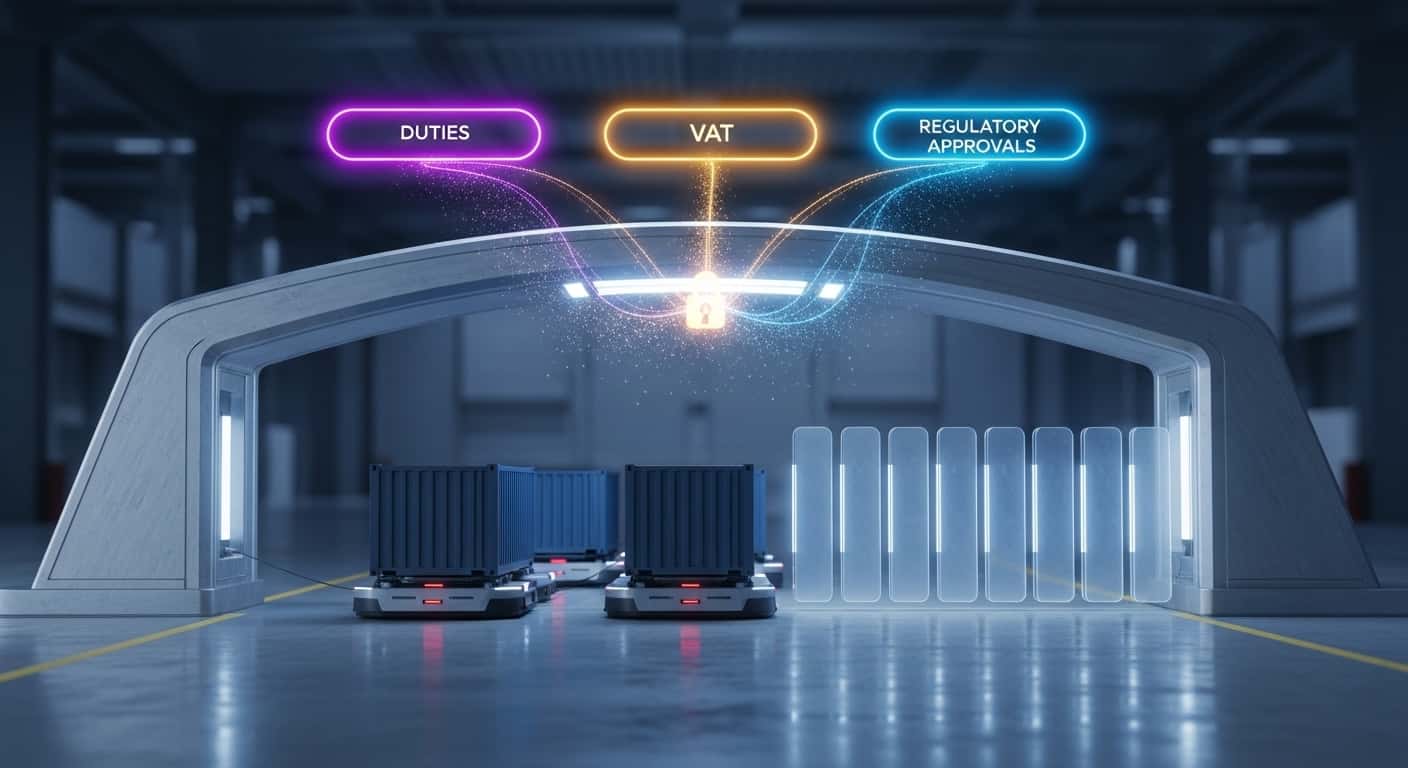
Importing into Morocco requires managing customs duties, VAT (TVA), and regulatory approvals. Key compliance steps include:

VAT (TVA):
Standard rate of 20%, applied on CIF value plus duties.
Import Duties
Based on HS code and product category, it typically ranges from 2.5% to 40%.
Delivered Duty Paid (DDP):
Duties and VAT are consolidated upfront for a clear landed cost.
Regulatory Approvals:
Products may require IMANOR certification or ANRT approval before import.
Enter your email to receive the PDF download link.

Acting as your legal Importer & Exporter of Record
Obtaining ANRT and IMANOR approvals
Filing customs declarations and licenses
Managing duties and VAT payments
Handling temporary imports and re-exports
Real-time shipment tracking and compliance updates
Deep knowledge of Moroccan authorities (ANRT, IMANOR, ADII)
Operate in Morocco without establishing a company
From permits to delivery—fully managed
Accurate HS classification and duty planning
Trusted partner across multiple African markets

Importing into Morocco doesn’t have to be complex. With a trusted IOR/EOR partner, you can ensure full compliance, faster clearance, and predictable costs—without operational risk.
Typically: commercial invoice, packing list, bill of lading, import license (if required), and conformity certificates (IMANOR/ANRT).
Yes, for telecom, wireless, or radio-enabled equipment.
A conformity requirement ensuring products meet Moroccan standards.
Usually 5–10 working days, depending on documentation and approvals.
Yes, through an IOR service provider—no local entity required.
The IOR is legally responsible. With DDP, these are prepaid and included in your landed cost.